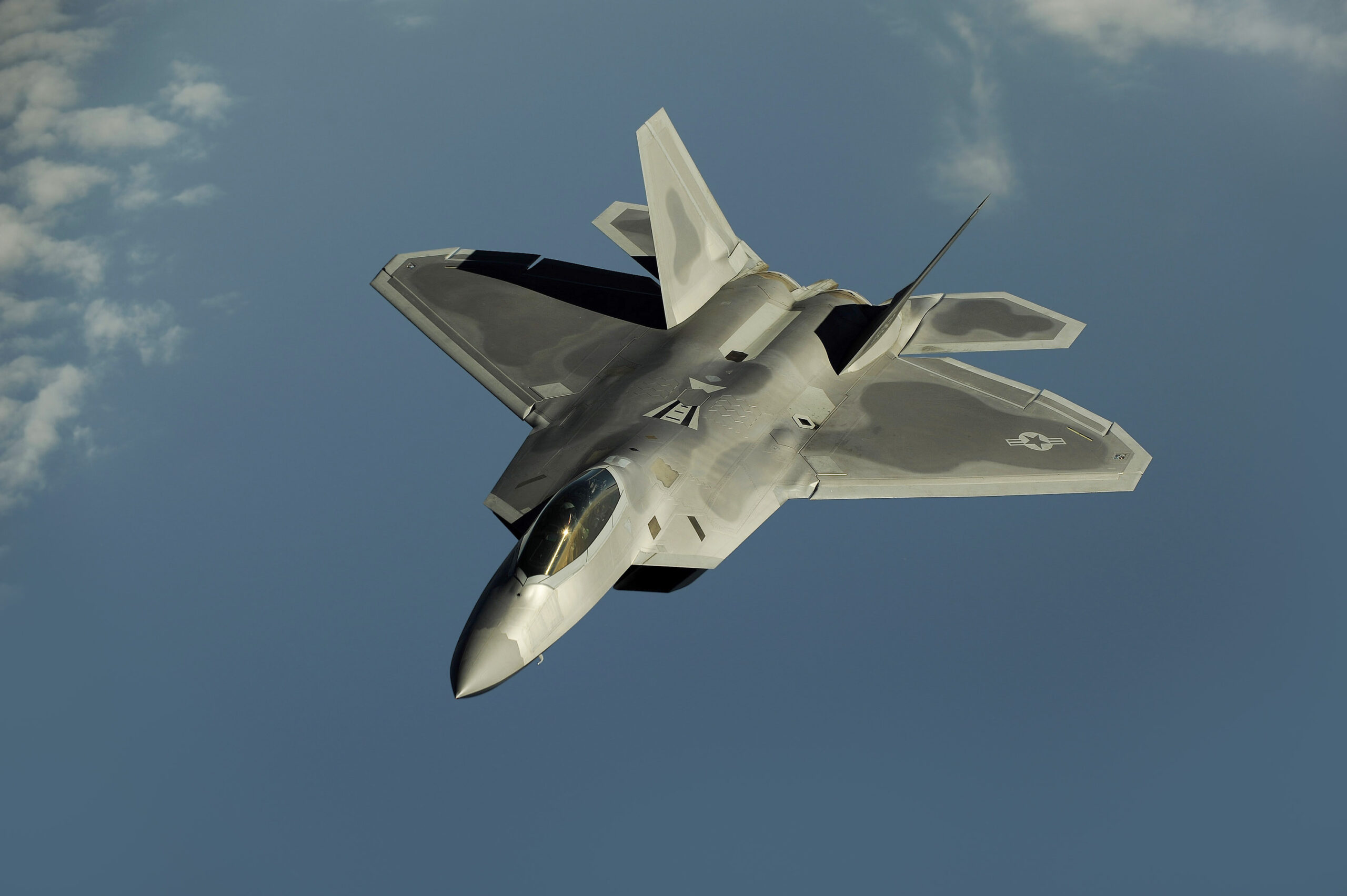
F-22 Raptor

General Characteristics

ParameterValue
Crew1
Length62 ft 1 in (18.90–18.92 m)
Wingspan44 ft 6 in (13.56 m)
Height16 ft 8 in (5.08 m)
Wing area840 sq ft (78.04 m²)
Empty weight≈43,340 lb (19,700 kg)
Max takeoff weight83,500 lb (38,000 kg)
Internal fuel≈18,000 lb (8,200 kg)
Fuel with 2 external tanks≈26,000 lb (11,900 kg)

Powerplant

  • 2 × Pratt & Whitney F119-PW-100 afterburning turbofans with two-dimensional thrust-vectoring nozzles (±20° pitch)
  • Thrust class: 35,000 lbf (≈156 kN) each with afterburner
  • Dry/military thrust: roughly 23,500–26,000 lbf each (sources vary slightly)

Performance

ParameterValue
Max speedMach 2.25 (≈1,500 mph / 2,410 km/h) at altitude
SupercruiseMach 1.5+ (commonly cited ≈Mach 1.76–1.82 without afterburner)
Service ceilingAbove 50,000 ft (estimates up to ≈65,000 ft)
Combat radius≈460–530 nmi / ≈850 km (clean, mission-dependent; includes supercruise segments in some profiles)
Ferry range>1,600–1,850 nmi / ≈2,000+ miles with external tanks
g limits+9.0 / –3.0
Thrust-to-weight≈1.08 (typical combat weight); higher with partial fuel

Armament (primarily internal for stealth)

  • Gun: 1 × 20 mm M61A2 Vulcan (480 rounds)
  • Air-to-air (typical internal): 6 × AIM-120 AMRAAM + 2 × AIM-9 Sidewinder
  • Air-to-ground options: 2 × AIM-120 + 2 × 1,000 lb JDAM (or 8 × 250 lb GBU-39 Small Diameter Bombs), with Sidewinders for self-defense
  • Four external hardpoints available (weapons or fuel tanks; increases radar signature)

Notes

  • Fifth-generation air-dominance fighter with all-aspect stealth, sensor fusion, supercruise, and supermaneuverability via thrust vectoring.
  • Production totaled about 195 aircraft (including test airframes); operational inventory has been in the mid-to-high 180s range historically.
  • Exact radar cross-section, precise engine dry thrust figures, and some performance envelopes remain classified or estimated from open sources.

Figures are drawn from USAF factsheets, Lockheed Martin data, and consistent open-source references (minor variations exist across sources due to classification and configuration differences).

Keep the formation tight. Share this: